Sometimes the obvious answer is the correct one. M Womersleys were sent a sample of material that had leached out of some restoration work

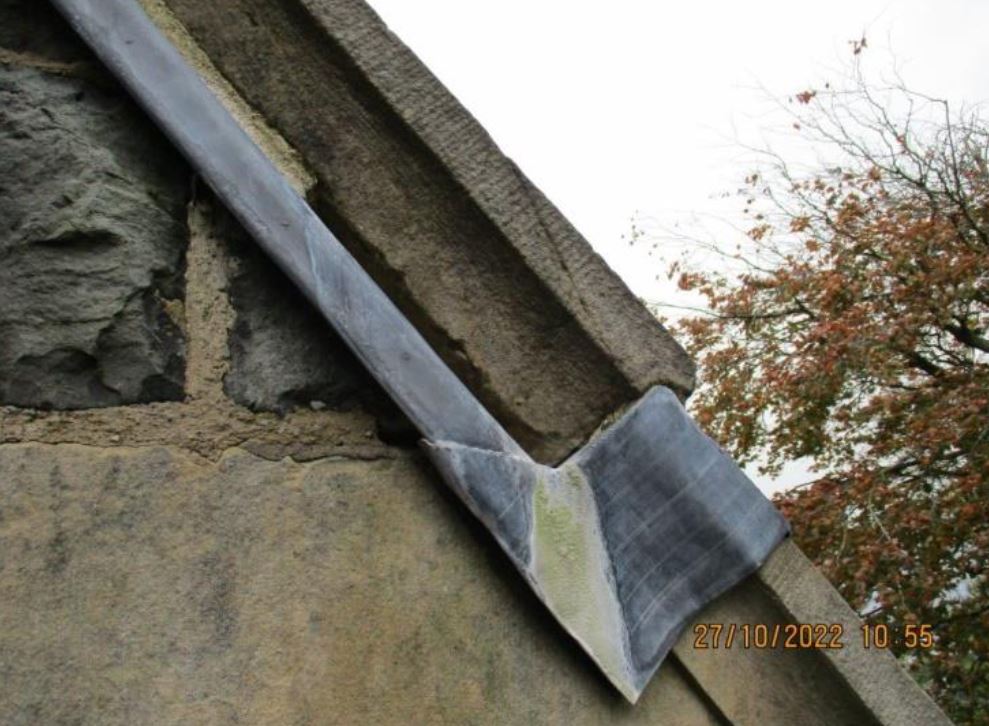
Sometimes the obvious answer is the correct one. M Womersleys were sent a sample of material that had leached out of some restoration work, from a church at Portglenone, in an area where copings were bedded on lead, and we were asked to determine its make up.
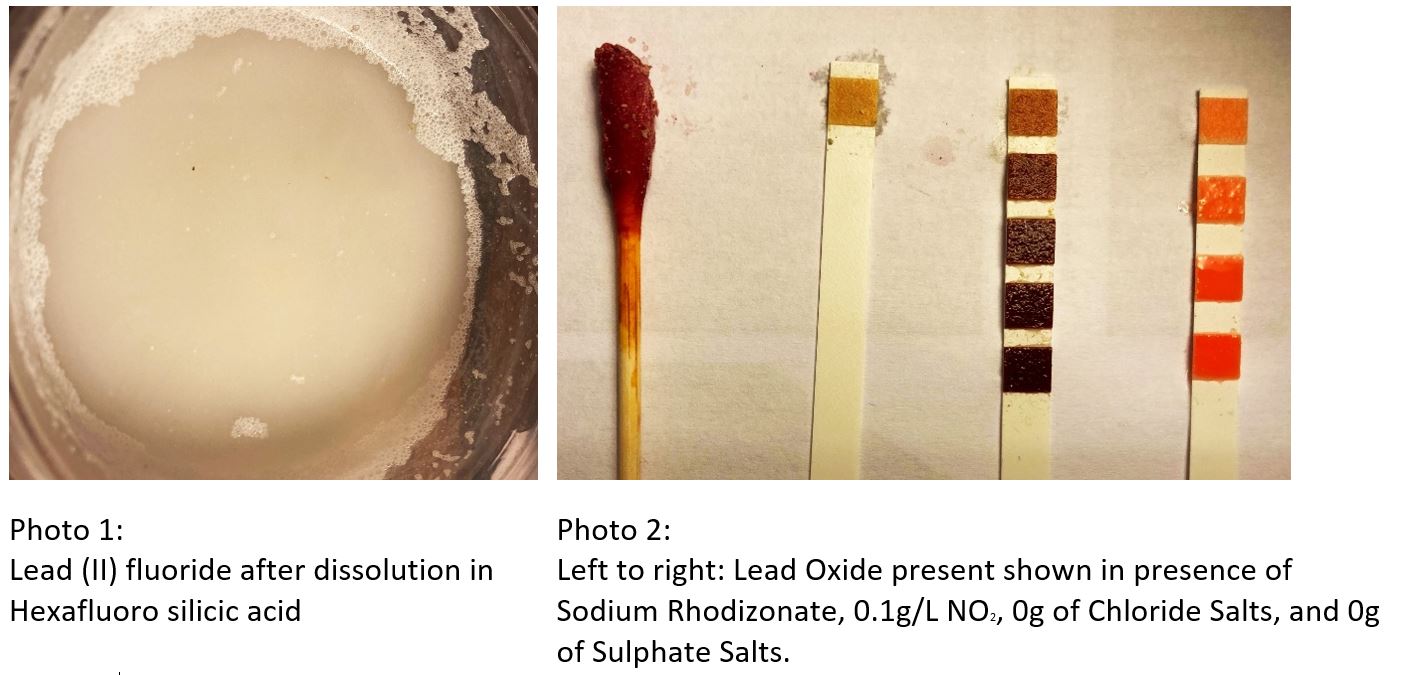
After it was dissolved in distilled water it was tested for different salts and lead. Afterwards part of it was dissolved completely in hydrochloric acid, and part in Hexafluoro silicic acid where it participated lead fluoride.
It was found to be rich in lead oxides and carbonates, without the presence of other salts. Simply, it appears that the deposits consist of lead oxide, lead carbonate and calcium carbonate, which has come from calcium hydroxide washed out of the lime mortar. The mortar was not likely to have been bound by enough of a hydraulic set or carbonated enough, in the first few months of its life, before severe weather hit the mortar.
There are problems which emerge from the use of hot lime and very weakly bound mortars in exposed situations, just as problems emerge for the fabric, when too strong a mix, is used next to weak materials. It is essential to choose the most appropriate mortar for the job and not follow current fashion, which often advocates the sole use of hot, or feebly hydraulic, lime mortar
Related Articles

Report on the most appropriate way to repair a stone plinth Gillygate York
M. Womersleys were asked by the owner of a property on Gillygate as to the best way to repair the plinth…

A scheme for the repair of the listed Barn and Granary perpendicular to Lily Hall, June 2026
Introduction M Womersleys were asked to prepare a scheme for the repair of the listed barn …

Bramhall Hall Initial findings after the plaster collection from the upper Solar Chamber
M Womersleys were asked to look at the makeup of the plaster in the Ball Room in the South Wing (Figures…