A scheme for the repair of the listed Barn and Granary perpendicular to Lily Hall, June 2026
Introduction
M Womersleys were asked to prepare a scheme for the repair of the listed barn perpendicular to Lily Hall (National Heritage List for England List Entry Number: 1151610) The report below consists of a survey of the building identifying the major issues facing this historic building, identified in Figures 1 to 5 below, followed by a suggested timetabled scheme for its repair.
The Context
The building is a grade II Listed Building and is described as a Barn and granary. Dated TW 1781 on a beam. It is a fine example of an later 18th century red brick farm building, despite later alterations denting it overall character. A separate Hertitage Statement has been prepared for this farm complex.
The South Elevation
The south elevation is brick-built with header bricks only showing externally every four to six courses, in an economical version of the English Bond. See Figures 18 to 30. The brick dimensions are approximately 250 mm long by 60 cm deep and 110 mm wide. They generally sit on lime-mortared beds of 10 to 15 mm. The main walls are three bricks wide and four at the plinth level, which is supported by limestone foundations on clay. It comprises six bays with the left-hand half being a threshing barn, with three stories, the top floor extending into the roof space. Similarly, the right-hand half of the building is three bays wide but designed with workshops on the ground floor and a granary, and perhaps farmwork accommodation, on the upper plaster floors. These upper floors accessed via an external staircase.
In the barn, plain ventilation slits to the left of a segmental-arched cart opening encourage airflow for grain and hay/straw storage. Above the first floor are four evenly spaced decorative arrowhead vents, and these are repeated on the top floor, although here they are also flanked by two holes to either side of the arrow's base. Two of these upper ventilation slots have been damaged by the insertion of a very large modern cow shed framed from steel and timber, and in part, its principal purlins bear down on the brick wall of the old barn and the granary to the east. The corrugated asbestos-cement-boarded cow shed is also causing some damage to the upper brickwork at the Western corner, to which it is connected, providing covered access for it and the tractors that served it. Brickwork lower down has been rubbed to an angle, and many of the bricks are missing or damaged on the corner, with two-thirds of the depth of the plinth course in that same corner missing subtle salt damage. Salt damage from cattle use is also evident on the brickwork. The plinth course on this elevation is hidden by a later concrete platform, which sits 700 mm above ground level, and the cattle area below and to the south, which was on the original floor level of the barn. The poor quality of brick used for the barn means there is distress and cracking in some of the brickwork, but no significant structural cracks running down or across the elevation, despite the proximity of the cattle shed.
The upstairs right-hand side of the building may originally have been a Granary and perhaps also provided accommodation for farm workers. It is accessed by a brick-supported stone staircase that has experienced some movement in the top 10 courses of brickwork. The brickwork has been dislodged by the handrail that is fastened to it. The original tie timbers between the brick wall against the barn, which is one brick thick, and the 9” outer stair wall, are loose. The stones forming the stairs have moved, as has their supporting brickwork, and the structure needs rebuilding from about halfway up its height, resetting the stone steps in the same order. The top landing slab is formed from two stones clamped together and will need careful handling.
The first floor of the granary is accessed via a segmental-brick-arched doorway, with a similarly headed window to the right, set on a stone sill. Another stone sill above provides the base for a later, perhaps Victorian, inserted timber-framed window that lights the second-floor space, above a limecrete floor. The upper window lights the loft/upper-floor space, which has collar-beam trusses without tie beams, providing freer access. Unfortunately, the limecrete floor has been seriously overloaded and has already partly collapsed, and the roof trusses are exerting outward force on the tops of the wall. This part of the building requires the most significant repair and conservation work. It is unclear if the bulging out of the brickwork in the gable end from this space is being partially caused by these stresses or by a compressing timber as described in the section about the east gable end.
The whole elevation is finished in a corrugated asbestos-reinforced cement roof covering with large plastic gutters and a fascia board, almost hiding a brick dentil course projecting off a lower stepped-forward course below, which would originally have carried a wooden or later cast-iron gutter.
The West Gable End
Illustrated in Figures 31-43, the west gable end has a four-brick-high plinth course at the north and south ends that has been damaged by farm machinery and trailers. A piece of limestone stands upright on the northwestern corner to offer some protection. Above the plinth, three evenly spaced ventilation slits supplied air to the barn's ground floor before being blocked up. At the first-floor level, there is a central taking-in door under a shallow segmental arch with a stone sill and metal pintles to carry a shutter door. To the right and left are two more ventilation slits, slightly further out than the ones below, but directly above them are two more filled-in arrow slit and another taking in a door. The upper gable is two bricks wide, but it’s partly supported by the end of the purlins, which sit in the wall and have fish-tailed wall plate brackets fastened to the end of the purlins, installed in the Victorian era.
The limestone kneelers extend up to 4 bricks deep into the brick wall and are decorated with a cyma recta moulding on the outside and carry quite lightweight limestone copings. This whole elevation is fairly straight except for the damage to the corners. There is damage to the poorer-quality, brittle bricks, and some individual bricks need replacement. The whole gable requires repointing after removing some later cement-bound mortar.
The North Elevation
The northern elevation (see Figures 44 to 63) has brick stretchers with headers every five courses; the barn to the right-hand side is accessed under a basket arch, with some visible rebuilding to the jambs, and the poor-quality work requires remedial action. To the right of the cart entrance is a ventilation slit and a crudely inserted modern doorway, which may have hidden the position of a previous similar ventilation slot. Above this newer doorway, there is a crude opening that may indicate where a previous beam sat in this wall to carry the first floor.
To the left of this hole at the former first floor level is a crudely inserted window or taking-in opening, with a timber frame only partially supporting the brickwork above, with the need for insertion of a proper lintel. To the top level of this barn are three ventilation slats with the arrowhead design that was noted earlier on the south elevation. At this same upper level, slightly left of the cart opening, is another inserted opening with inadequate lintels, with a small indication that this has replaced another arrow-headed vent.
To the left-hand side of this building’s north elevation are the workshops and the granary. Left of the cart opening are two higher-quality inserted windows at the higher ground level, lighting a workshop that extends the full width of the building, and, to the left, the original segmental-headed doorway into this same space. Further to the left, towards the east end, we have a small segmental-arched window with a stone sill. In the centre of the first floor of this half of the building is another segmental arched topped window with a limestone sill, and a Victorian recessed window with a timber lintel and timber mullion. The whole is topped on the southern side with projecting dentil gutter brackets, now partially hidden by modern barge boards and plastic gutters.
There is a movement crack running through the stone sill of the middle original opening, and it extends slightly to the left of the window below. This indicates a major problem with overturning the brick wall in the top meter of this half of the north elevation. As does the cracked running from approximately a metre below the top eastern corner to a 600 mm along the eaves line. There is also a crude opening towards the left-hand ground floor that needs rebuilding, and a mechanically damaged corner where the elevation meets the lower part of the gable end. The causes of the structural movement in the upper parts of the left-hand side of the elevation are discussed in more detail with the granary accessed via the southern elevation.
The East Gable
The east brick elevation, with its limestone cyma-recto moulded kneelers and copings, rises above a later concrete ramp installed for cattle feeding (see Figures 29 to 37) and has a bulge at the beginning of the gable end, which is covered in the discussion of the upper Granary space. A later door opening to the ground floor has been rebricked up to the outer leaf only, and to the left-hand side, there remains a shuttered concrete lintel to a modern window. Cracking runs up the gable end from the right-hand side of this modern window that works, all the way to the underside of the upper second-floor central window opening, which has lost its original sill and now has a bat box installed. Iron splayed pattresses are visible at the top of the gable, fastened through to the Victorian purlin ends. There are also two modern ventilation grilles serving the first-floor level. There’s also some localised damage on both corners, approximately 2 metres off the ground.
Inside the Threshing Barn
The interior of the barn and the issues it faces are illustrated in Figures 6 to 17. The threshing floor area of the barn is covered by a concrete slab and above are heavy reused and crude floor joists sat in the brick wall that subdivides this space from the adjacent workshop, and the only remaining chamfered and stopped floor beam within what is now a large and open space. The beam does not sit tightly in its brick socket in the northern wall. The internal east wall across the width of the barn has had two substantial openings crudely inserted without lintels. This will have caused some distress in its structure, and there is some cracking below a later render that hides the top of this wall. These openings require rebuilding in a similar-strength lime mortar and matching brick, and tightening with slats within the joints. Everywhere, the exposed brickwork faces on the inside require localised repairs where the walls have been mechanically damaged, with repointing and pinning. The western gable looks in reasonable condition, but where it steps back in the gable area to a 9” brick wall, it needs to be checked that the embedded wall plate timbers are not suffering from rot.
Two original tie-beam and collar roof trusses carry the modern roof covering, which allows some daylight and weather through; now the tiles have been lost, with reused common rafters and later-pegged Victorian purlins. The trust beams are chamfered with stops, but there is some surface decay on the western one, which needs checking once access is possible. The wall plates on both long sides appear Victorian, and their condition needs to be checked once access is gained; no damage can be seen from the first-floor platform. At least one rafter is loose, and others don’t extend the full height of the roof and require repair before further reroofing works. Below the roof, the space that has lost two floors is filled with a silo, and some of the holes in the brick walls are likely associated with its use.
It should not be underestimated how the lack of floor structures within this space has compromised the integrity of the structure, and the external cattle shed should not be removed until a new structure, designed by a structural engineer, is inserted at the first- and second-floor levels.
Inside the ground-floor workshop spaces
Illustrated in Figures 100 to 106. Accessed from the north and south, the workshop adjacent to the threshing barn is lit by the northern elevation. The workshop store to the left of the cart entrance is lit by two more modern windows and is spanned by a central Victorian floor beam, supporting floor joists that run the full width of the building and later pine flooring. (An opening in the floor allowing feed or grain to be dropped from above suggests how the use of the vertical spaces in this part of the building was interconnected).
Below it’s brickwork previous Paint finishes and potential line wash finishes little bit of remains of wrestle sanctuary remains of a concrete render apply cement render applied about me high stable doors they openings the door openings internally supported off substantial lentils with brick shallow brick relieving outs on the southern elevation and flat brick on the northern elevation but externally they have sent to Briers. The access from this room is an additional store building.
The additional Small star building now subdivided across its across length with a concrete wall which which can flow Joyce in a similar arrangement to the adjustment space which run across the width there is an additional bracket of storage area for fencing a metal and a cages and such like the internal brickwork that you can see the visible the brick to boarding it’s only been brick took by a single brick the window opening with it just timber slats to revive ventilation but no Glass has got a lentil inside and externally a segmental Brea moving round to the other side of the same room
Moving into the first floor of what maybe the accommodation end of the van we have a floor of approximately 2 m high originally plastered with Lime plaster on to Reeds which carry a substantial Lyme Creek floor above. These are supported of two substantial floor beams with span the width of this space with crew Chambers The interestingly the one to the western elevation split cities and has two nice Shefford stops the space extends. It is all plastered eternally. There is an opening circular that may have held a pipe any remains of any from heating or stove arrangement are no longer visible within this space if it was accommodation moving up the ladder and there is a small ladder taking us to The into a semi roof space and in within the space we find the principal rafters high enough to give more usable accommodation space, and a colours with the western elevation. One with Carpets marks and looks more ancient than the or maybe reused more colour across this roof is like the other one supported off Victorian Perlin which passed through when a pegged through the principal rafters the ones to the west again look older unfortunately these have no lower tie to them and they’re causing the outer wall to spread the lower. What was it? Maybe Thai beam in the first above? The first beam is is cooked and whilst it appears at first forms the queen post is very crude in his fashion and the tie would be in substantial be having been cut and batting down potentially on the beam below and putting it under further stress. It is hard to see what the purpose of that was except that it was an adapted earlier Trust and it was raised to create more to create usable accommodation space within this area all dropped to provide more usable accommodation. Space the walls are getting plastered the gable and single required some timber contraption there and in the original taking in opening there’s no details of any roof left because but some roofing buttons remain on the pearlings which are more modern than those in the barn area and slider in size.
Inside the Granary
Moving into the first floor of what maybe the accommodation end of the van we have a floor of approximately 2 m high originally plastered with Lime plaster on to Reeds which carry a substantial Lyme Creek floor above. These are supported of two substantial floor beams with span the width of this space with crew Chambers The interestingly the one to the western elevation split cities and has two nice Shefford stops the space extends. It is all plastered eternally. There is an opening circular that may have held a pipe any remains of any from heating or stove arrangement are no longer visible within this space if it was accommodation moving up the ladder and there is a small ladder taking us to The into a semi roof space and in within the space we find the principal rafters high enough to give more usable accommodation space, and a colours with the western elevation. One with Carpets marks and looks more ancient than the or maybe reused more colour across this roof is like the other one supported off Victorian Perlin which passed through when a pegged through the principal rafters the ones to the west again look older unfortunately these have no lower tie to them and they’re causing the outer wall to spread the lower. What was it? Maybe Thai beam in the first above? The first beam is is cooked and whilst it appears at first forms the queen post is very crude in his fashion and the tie would be in substantial be having been cut and batting down potentially on the beam below and putting it under further stress. It is hard to see what the purpose of that was except that it was an adapted earlier Trust and it was raised to create more to create usable accommodation space within this area all dropped to provide more usable accommodation. Space the walls are getting plastered the gable and single required some timber contraption there and in the original taking in opening there’s no details of any roof left because but some roofing buttons remain on the pearlings which are more modern than those in the barn area and slider in size.
Still within the accommodation area at the first floor at the end of the barn there is crack running from the end of the floor beam and through to the left towards the original window opening on the southern elevation. I’m just gonna look to see visible outside it’s not visible outside on the brickwork. The Stone cells are laminating a little and the previous timber frames still institute basketball brickwork and should only be removed if you were mentally inserted have to propping.
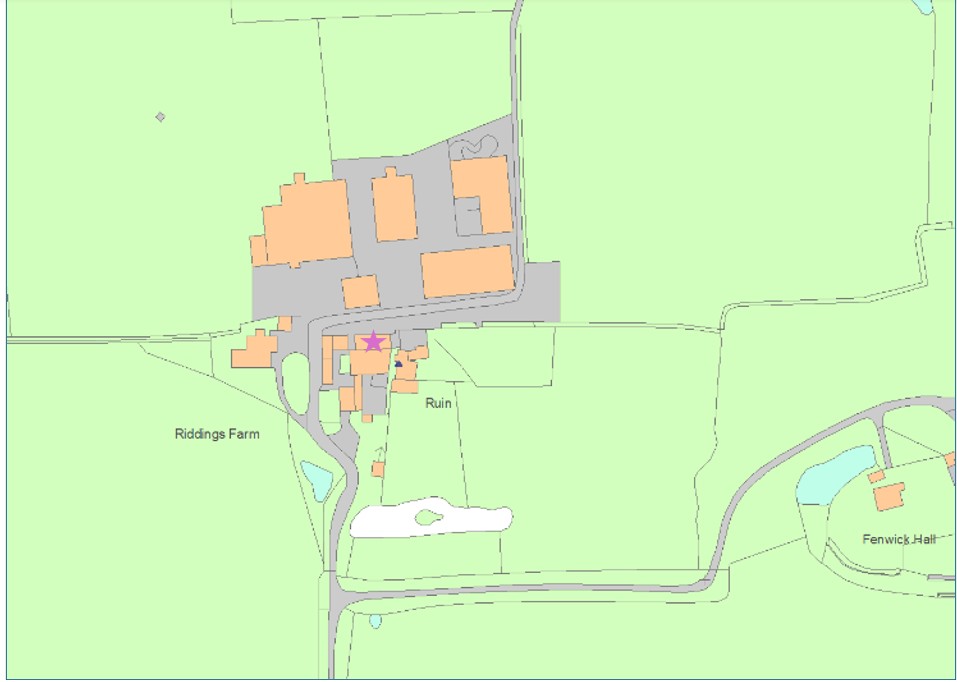
Figure 1. The location of the Barn and Granary (At Riddings Farm) is immediately to the north west of Lily Hall
 Figures 2 to 5. The south, the east, north and west elevations of the Barn and Granary at Riddings Farm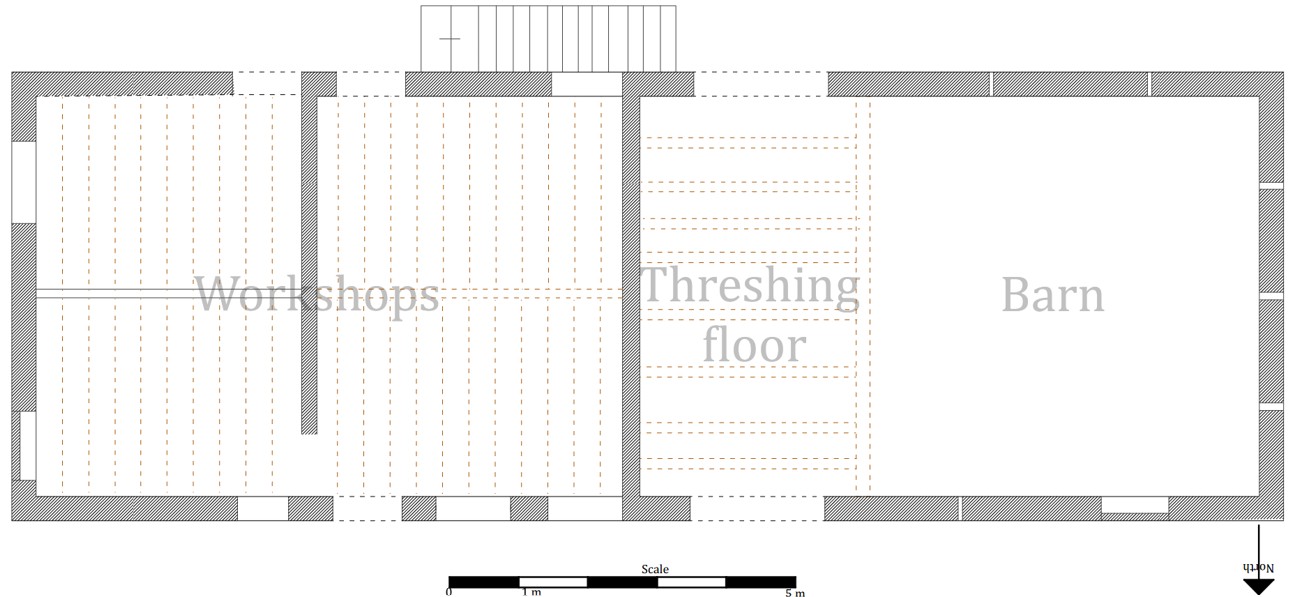
Figure 6. Ground Floor Plan
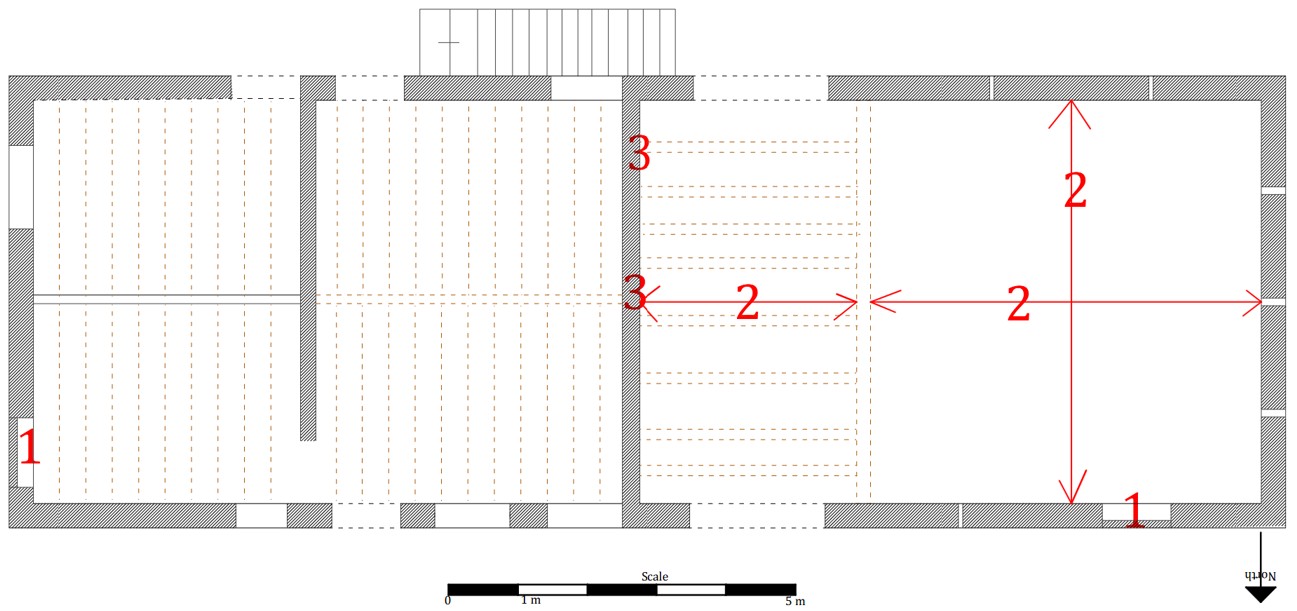
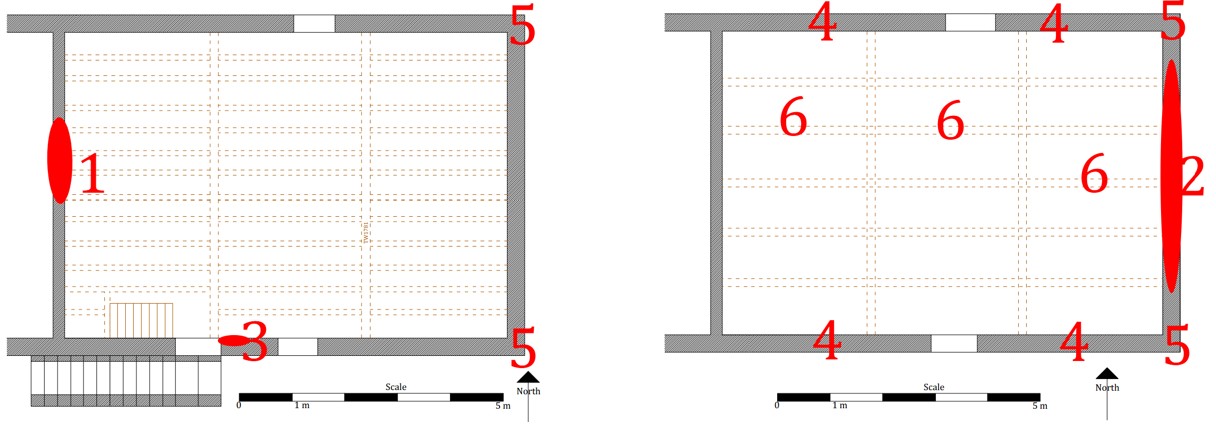
Figure 7. Ground Floor Plan, showing more significant areas of concern. Including inadequately blocked up openings near corners (1), an almost complete lack of restrain for the walls at first floor level, with floor beams and joists missing (2), and crudely inserted openings through the central spine wall (3).
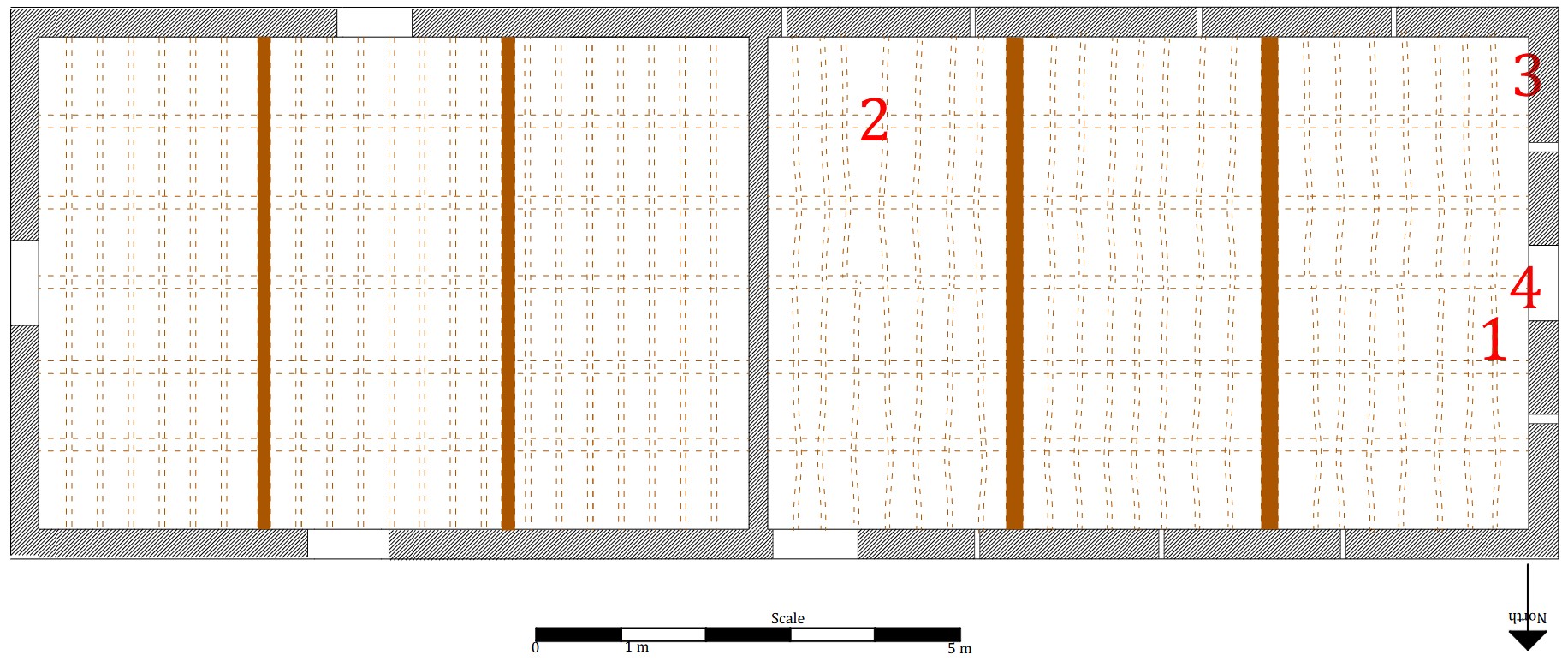
Figure 8. Top Floor Plan, showing more significant areas of concern. Including a loose rafter (1), an example of a pieced together rafter which will struggle to carry a later roof (2), movement in the south west corner (3) and cracking above and around the window at the bottom of the gable (4).
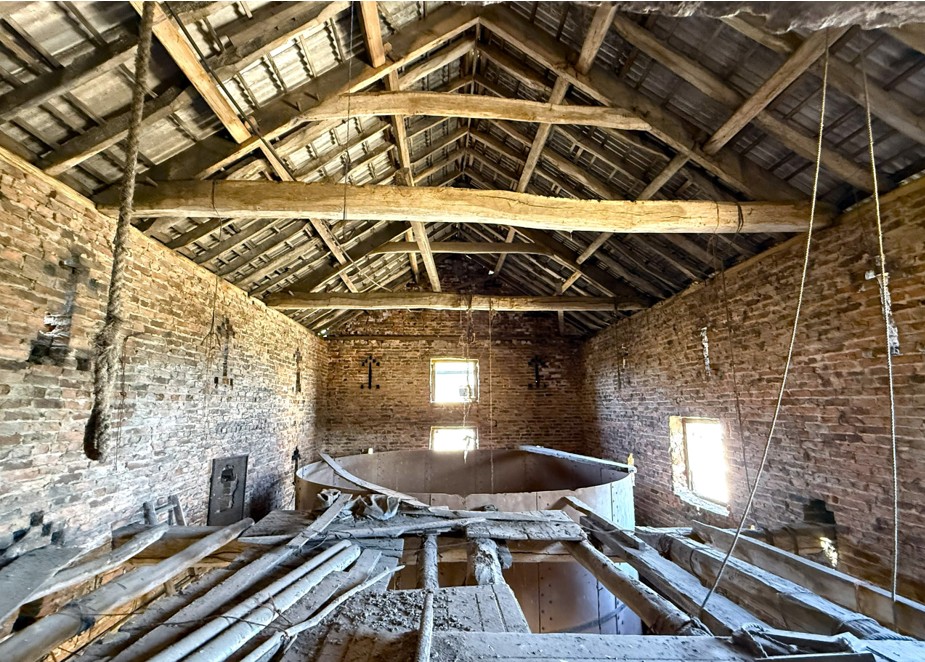
Figure 9. The roof structure within the main barn comprising of two collar and tie beam trusses that are likely to date to the 1781, carrying later Victorian purlins and reused common rafters, all supported by wall plates. Whilst a close inspection was not possible the main elements supporting the rafters appear to be in reasonable condition.
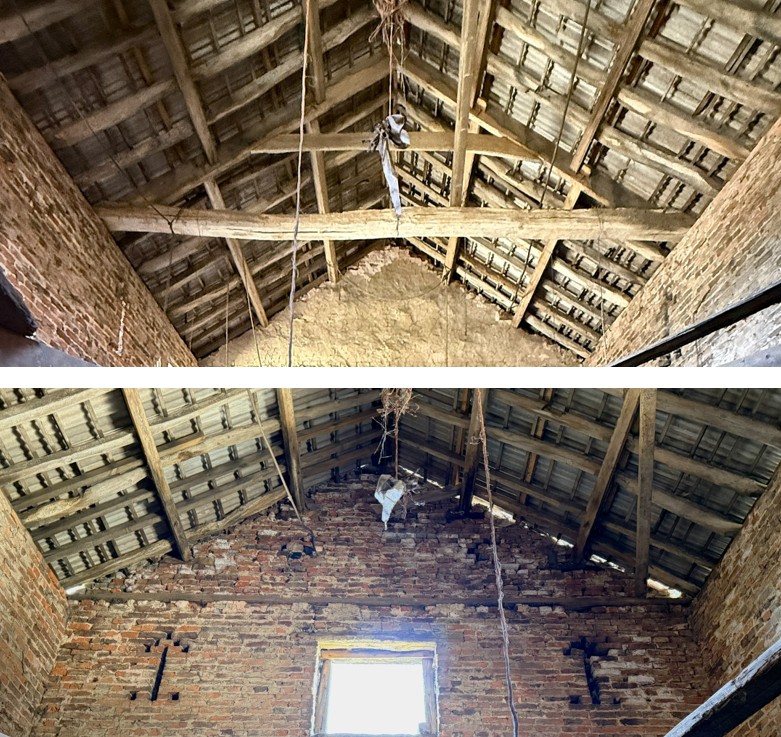
Figures 10 and 11. The purlins are carried off a 9” brick cross wall where the barn abuts the granary, and off a similar 9” brick west gable wall. All four purlins are secured to Victorian wall plates on the outside of the gable.
 Figures 12 to 17. Show visible distress inside the barn space, which whilst originally well-built and properly renovated in the Victorian era, has been abused by the removal of the floor structures and unsupported opening being inserted through the structural walls. Figures 13 & 14 show the resultant cracking down the walls. Figure 13 also shows surface decay on the tie beam and Figure 15 a loose rafter.
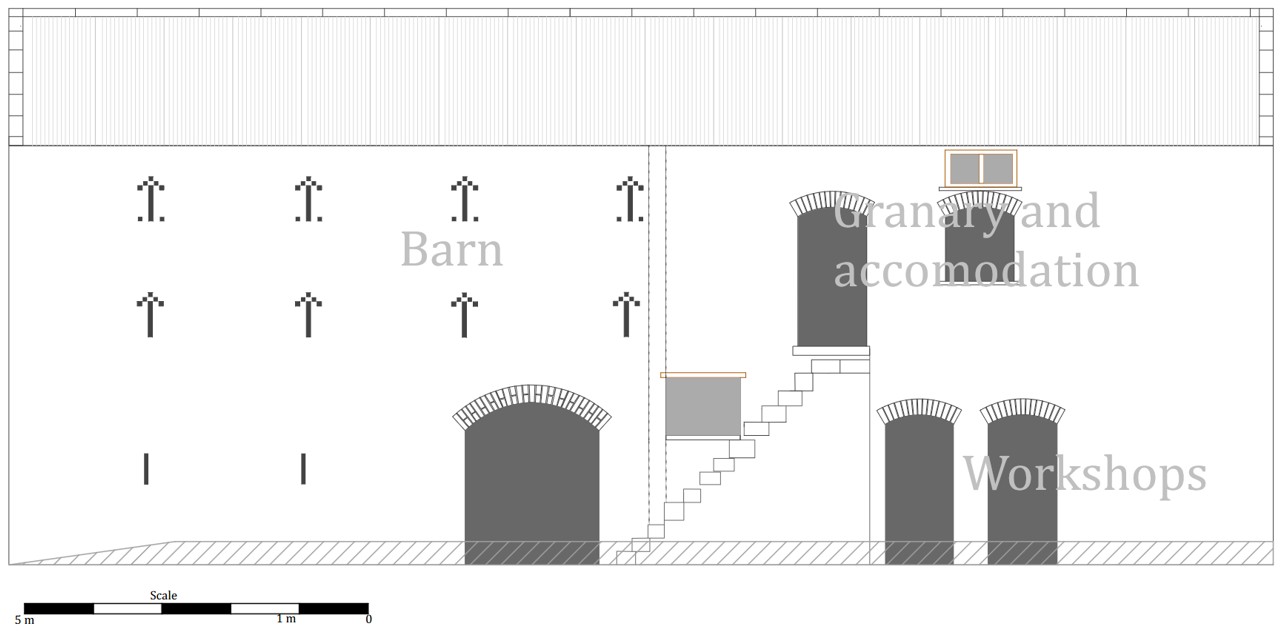
Figure 18. The principal southern elevation. Showing a well-ventilated barn, a cart entrance serving a threshing floor, and a staircase accessing a granary and potential farm workers accommodation space, above workshops in the eastern half of the building.
 Figures 19 to 23. A view of the south elevation, with an outside ground level raised significantly by a later concrete feeding ramp for a large lean to cattle shed. Decorative arrow head ventilation slits vent the former upper two floors of the barn. The bricks appear kiln burnt an hand moulded but are not are not the better bricks from the middle of the kiln but rather what were called Builders’ 2nd and some Builders’ 3rd. Some have broken and are cracked because they are poorer quality but they have also suffered mechanical damage to the south west corner including the plinth courses. They are bedded on a lime rich mortar but have been over pointed in some areas with early and later cement bound mortars. Efflorescence is also Cleary visible.
 Figures 24 to 29. The use of the south yard for cattle has resulted in tractor damaged brickwork at the western end of the building, and the whole cattle area has been covered by a large lean to structure, in part supported off the barn’s south wall. The barn door opening has been damaged by alter joinery work but the adjacent workshop doorway just require repointing and pinning work.
 Figure 30. The principal areas of distress visible on the south elevation. The damage caused by tractors is referenced as ‘1’, the location of the inserted purlins for the large cattle shed as ‘2’, the outwardly moving brickwork damage caused by roof spread and second floor overloading (3), the dislodging of the bricks supporting the first floor stone door landing, by the handrail and the generally poor condition of the external staircase (4) and localised missing and damaged bricks referenced as ‘5’.
 Figures 31 and 32. The western gable end with its now partially blocked ventilation slits and its taking in doors below a coped gable formed of cavetto moulded limestone and fine 18th century kneelers supporting the outward thrust of the coping stones. The gable end requires localised brick repair and repointing but also some severely damaged and broken coping stones will require replacement (1), The tractor damage also evident on the south elevation repaired by localised rebuilding 2 & 3) and the decaying timber loading bay door frames repaired, especially where the are supporting inserted brickwork below the arch.
 Figures 33 to 38. The limestone window sills shown in 35-37, are suffering from delamination and the wooden frames are in need of repair or replacement, the limestone coping above the kneeler is lost altogether, as seen in Figure 36 and as on all elevations the brickwork needs repair and repointing. The large plastic gutters whilst unsightly take water away from the building but a new end to the gutter is required to the northwest corner.
 Figures 39 to 43. Show the severity of the damage to the limestone copings caused by over two hundred years of weathering and mans handling of them and the badly damaged plinth courses at the western elevation.
 Figure 44. The north elevation, below a modern corrugated cement fibre board roof covering and a now almost hidden dentil course of brickwork designed to carry a wooden or latter a cast iron gutter. The original or earlier opening are shaded dark grey and the later ones from all periods of the 20th century, of varying quality in light grey. The threshing barn accessed via basket arch had minimal opening to this colder north side and the workshops and granary just the minimal required for access and lighting and ventilation.
 Figure 45. The distress that is visible on the northern elevation is more concentrated at its eastern half, with overturning upper walls (3) parting company from the brickwork below the kneeler stone (2) and a movement crack running through and down below the first floor window (6). Over the whole elevation, there is localised damaged brickwork to the walls and plinth in areas marked with ‘1’, unsupported later openings missing external lintels (4) and redundant openings that previously carried attached pipes and structures (for example, see ‘5’)
 Figures 46a-d to 47a-c. Some previous ventilation slits have been opened up and left damaged, the upper right-hand corner of the building has been repointed but is exhibiting some more limited cracking and need to be monitored, (it may just have been previous water damage), the drainage pipe needs reconnecting at the bottom to surface water drains to take the water away from the foundations and finally damaged and in places cement rendered plinth bricks require repair.
 Figures 48 to 53. The upper three photographs show the damaged and lost brickwork caused by inserting a new opening with brickwork above left unsupported, and the lower three show the more serious distress to the brickwork as it cracks below the upper windows, with floor overloading inside and a spreading roof, the likely culprits.
 Figures 54 to 56. The upper wall of the granary is overturning and becoming detached from the corner.
 Figures 57 to 63. The bottom half of the Eastern end of the building has brickwork that requires localised rebuilding, re-pointing, and pinning.
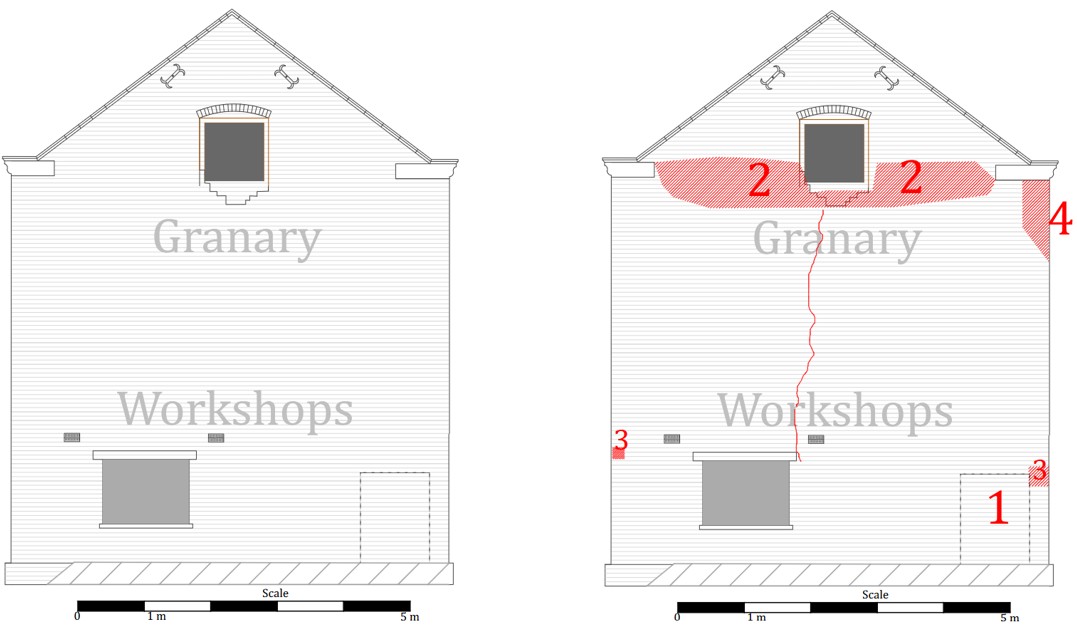
Figures 64 and 65.
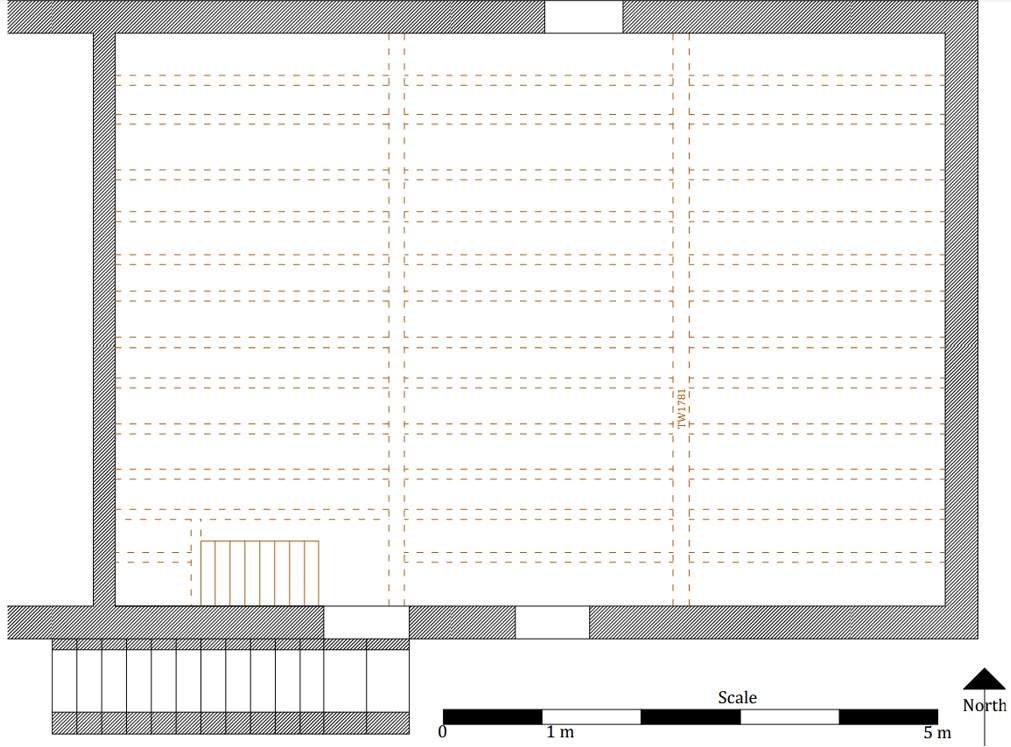
Figure 66. The Granary/farm works accommodation, first floor
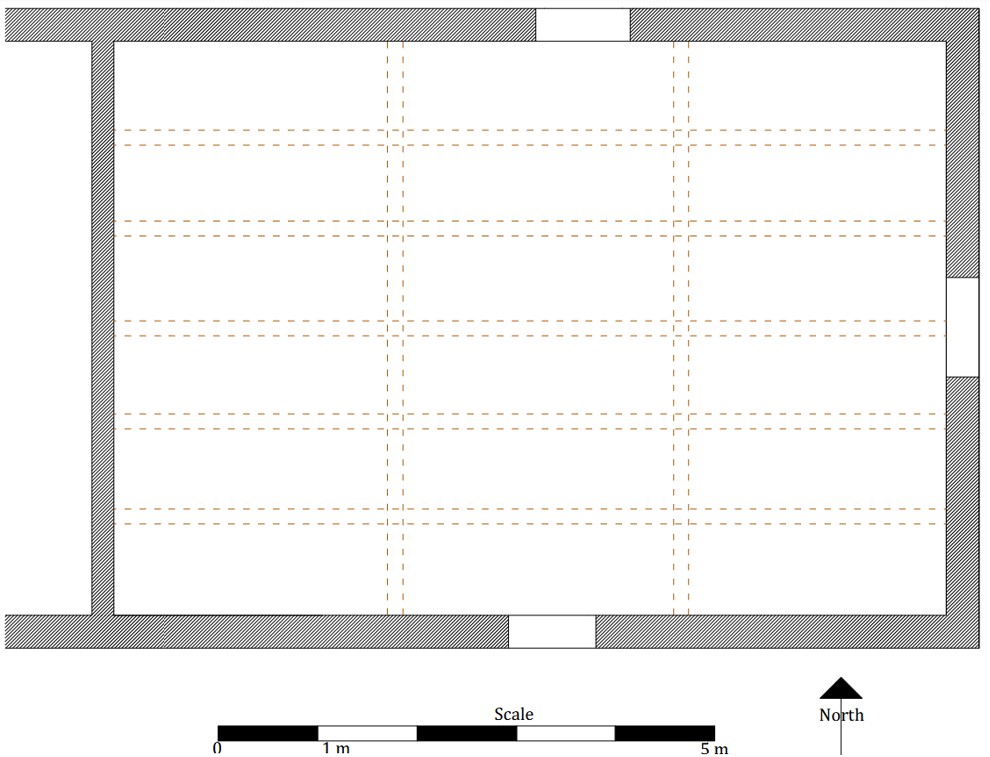
Figure 67. The Granary/farm works accommodation, second floor in the roof void
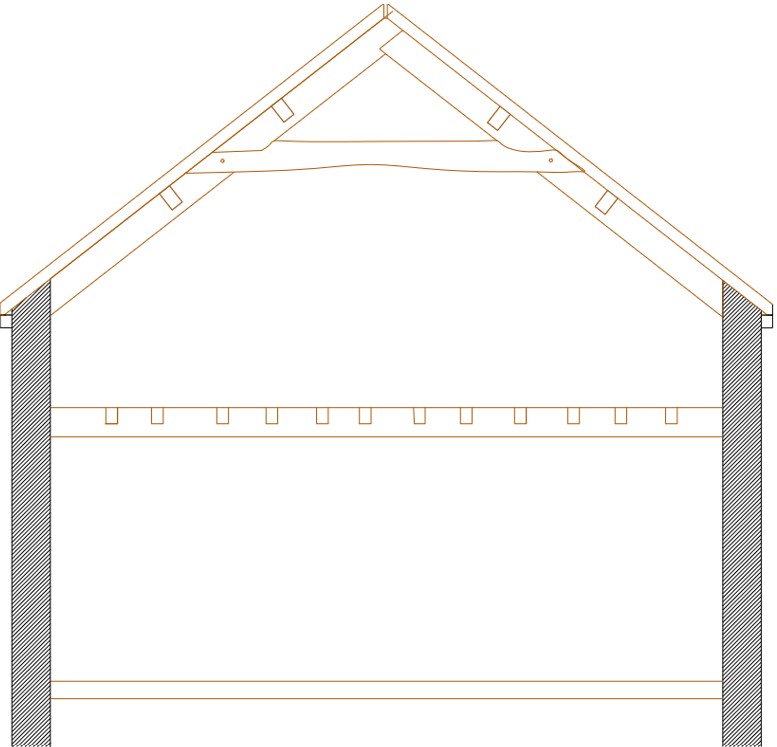
Figure 68. One of the lap-jointed collar beam trusses is shown in this cross-section of the granary. Victorian purlins have been inserted through the principal rafters and pegged to stop lateral movement. The common rafters above also appear Victorian. The second floor comprises a gypsum-gauged lime concrete floor. The first floor is more modern; the original is lost.
Figures 69 and 70. The first floor of the Granary (upper left) has a more modern timber floor, but above, below a forked floor beam, a date of 1781. This beam, together with its brother, carries the ceiling joists and a limecrete floor, below which we applied a thin lime plaster top coat. This space has a collapsing, overloaded ceiling, resulting in cracking in the brickwork supporting one of the main beams (3), and its cross wall is weakened by a roughly inserted opening into the main barn area (1). The second floor, partly within the roof space, has a limecrete floor that is severely overloaded with old tiles, stone and other materials (6), contributing to the bulging gable end at window sill level (2), but which is also the result of probably embedded timbers in this wall, see Figure 75 below. The walls, weakened by the insertion of windows, are being pushed out (4 & 5) by the spreading roof and under-restrained collar-beam roof trusses.
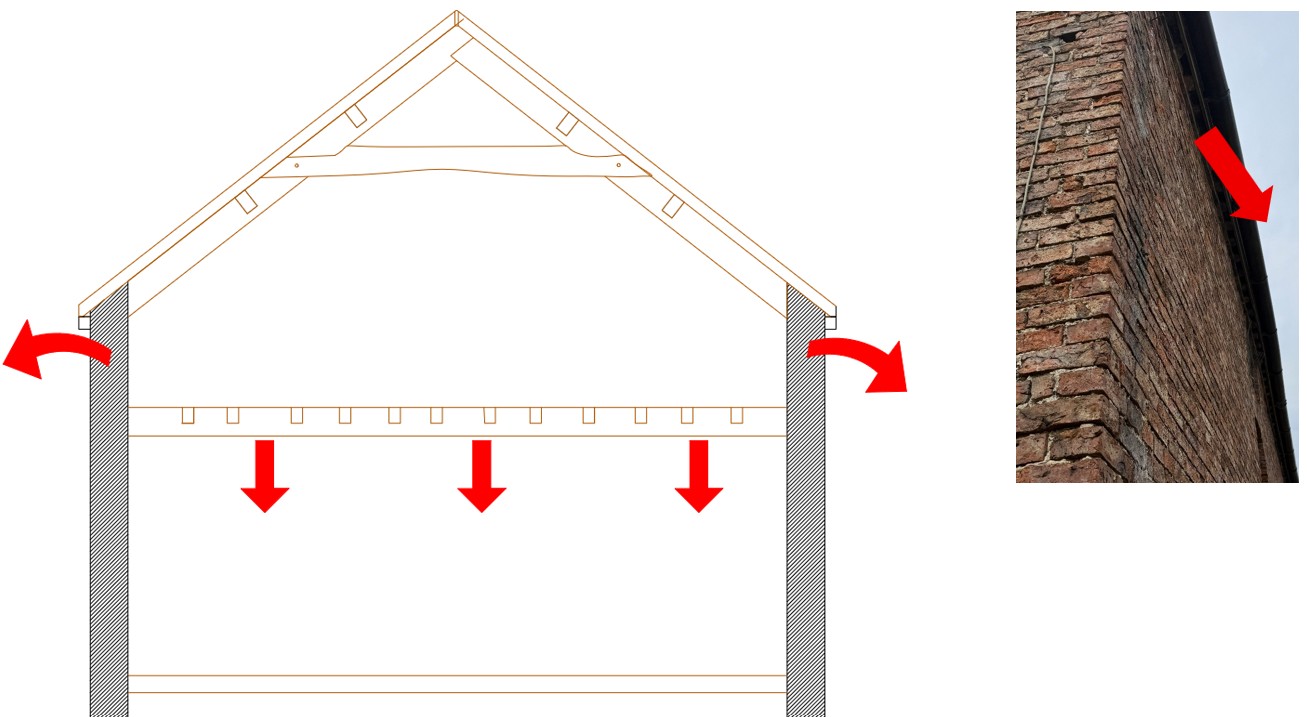
Figures 71 and 72. Excessive floor loadings and outward roof thrust are causing movement in the top of the brick wall.
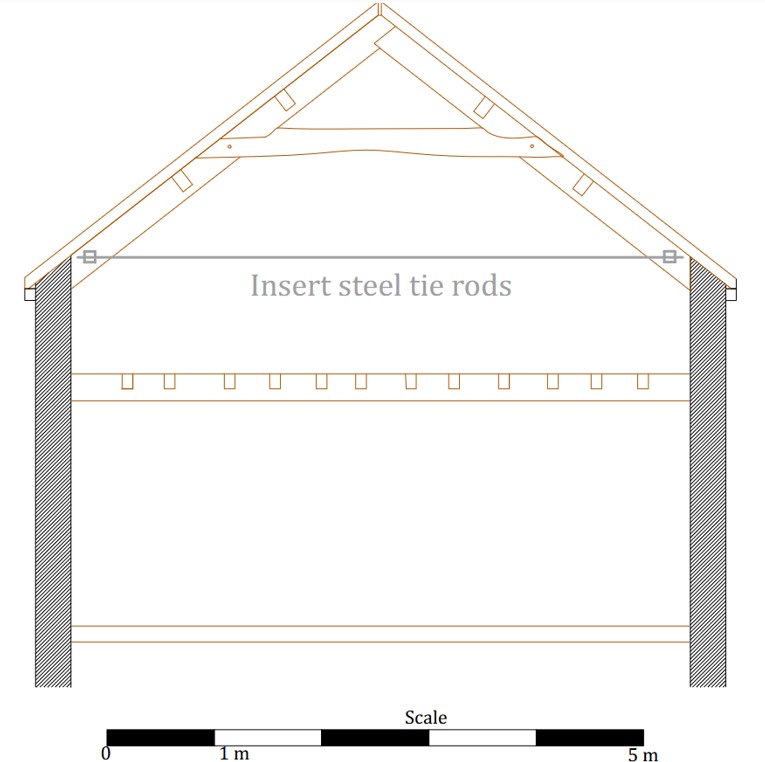
Figure 73. The solution involves the insertion of tie rods and the strengthening of the overloaded floor structure after debris removal.
 Figures 74 & 75. Access to this area was not possible, but the likely explanation of the bulging line below the window is shown in Figure 75. This shows a likely decaying embedded timber suffering partial rot and compression, allowing the minimal number of headers to snap under the stress of differential movement in the leaves of the brickwork.
 Figures 76 & 77. Cracks to the north east corner of the northern elevation and down the centre of the eastern gable as a result of the stress on the roof space of the Granary.
 Figures 78 to 82. The external stone-stepped staircase entrance to the Granary needs rebuilding from just below halfway up, and the overloaded limecrete ceiling/floor above the first floor requires immediate attention.
 Figures 83 to 86. The deteriorated and partly failing limecrete floor and plaster is supported by a dated and formed floor beam finished with simple chamfers and stops.
 Figures 87 to 90. Splitting timber floor beams and cracked brickwork supporting the overloaded floor above
 Figures 91 to 95. The slender 18th-century collar-beam trusses in the roof space of the granary above an overloaded floor.
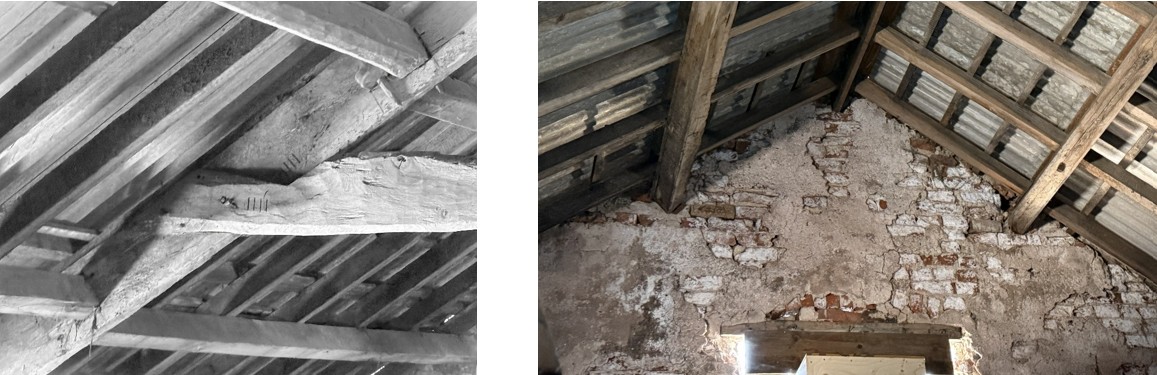
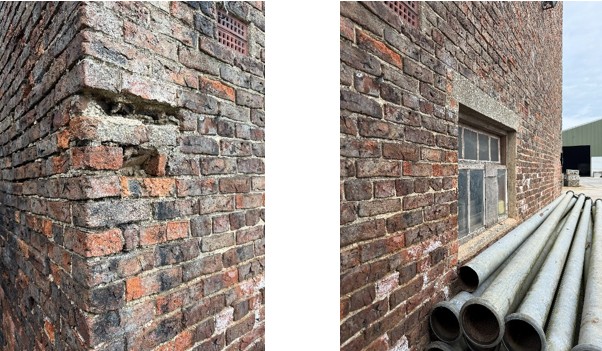
Figures 96 to 99. Lovely lapped and marked joints in the trusses, carrying later Victorian purlins. The base of the eastern gable requires the salt-laden concrete to be removed from its base and localised brick repairs, after stabilisation of the first and second floor spaces above,
 Figures 100 to 103. Inside the principal workshop with an earlier window on the south side and two later ones on the north elevation. The brick walls have previously been lime-washed and are now rendered from 1 m above the ground with a cementitious render.
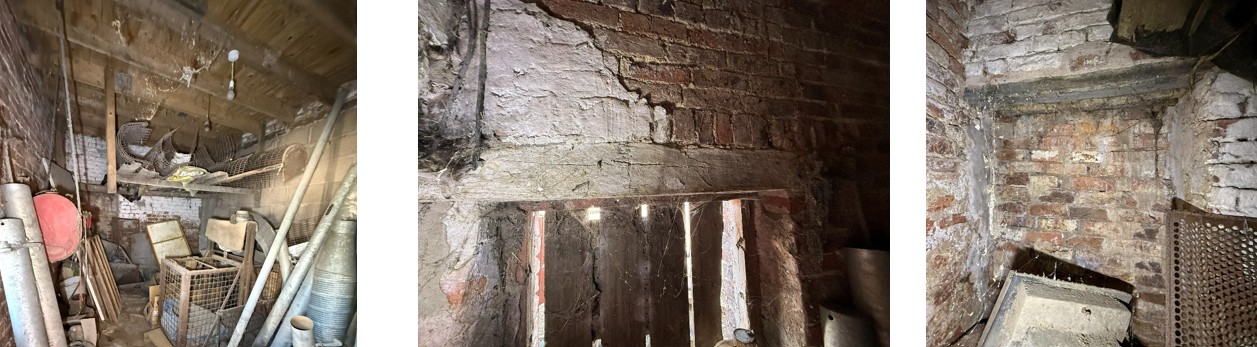
Figures 104 to 106. The eastern workshop now subdivides along its length with a modern wall, remnants of earlier plastered walls remain, as does a later blocked doorway in the gable end.
Related Articles

New training course dates in December for those who wish to learn how to use lime for repointing, building and plastering
M. Womersleys provides more in-depth training courses in the use of lime for building, pointing and …

Report on the most appropriate way to repair a stone plinth Gillygate York
M. Womersleys were asked by the owner of a property on Gillygate as to the best way to repair the plinth…

Bramhall Hall Initial findings after the plaster collection from the upper Solar Chamber
M Womersleys were asked to look at the makeup of the plaster in the Ball Room in the South Wing (Figures…