Paint analysis of a limited number of samples taken at Hall i’th Wood Museum, Hall i’th Wood Lane, Bolton
M Womersleys were asked to undertake some paint sampling at Hall i'th Wood Museum. Originally, this building was a much smaller-scale, early 16th-century hall with a screens passage, which is likely to have sat within the current extended great hall, with a northern stone service wing attached. There appears to be no plaster or render from this period remaining (although some mortars from this period are looked at separately in the mortar analysis that was done concurrently with this survey). The property’s north wing was then extended west, and perhaps the western porch was built at this time.
The house was substantially extended in 1648, increasing its scale. The Stone south wing was built, and perhaps the east timber-frame range was enlarged and partly reclad with decorative framing. It is to this period that at least two of the three plastered ceiling panels in the north-eastern Crompton Room belong, with their lack of armorial motifs, which were avoided in the turbulent times of the civil war. The whole building was restored c1900 by Jonathan Simpson and Grayson and Ould for Lord Leverhulme, and at this time the two fine fibrous-plaster panelled ceilings were introduced into the Norris Dining and Withdrawing Rooms.
There are a few examples of paintwork that appear to show layers dating from the late 16th century, some behind old layers of paint and lime plaster, which were originally used to decorate lime finishes on clay daubs and onto timber framing. The oldest paint layers are visible in the photographs of samples 4 and 2, with the earliest layers in samples 1 and 3 dating to 1648.
Sample 1: Paint from the north wall of the Norris Dining Room (above panelling and to the window end of the wall)
 Location of sample
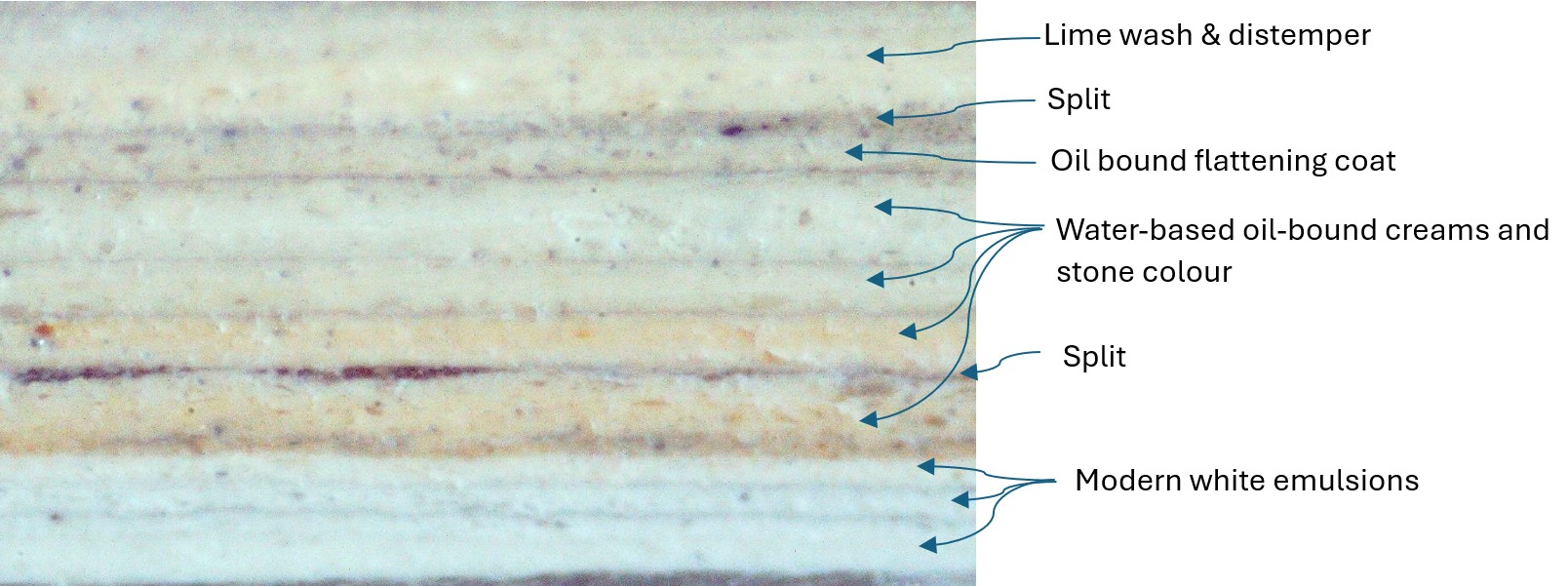
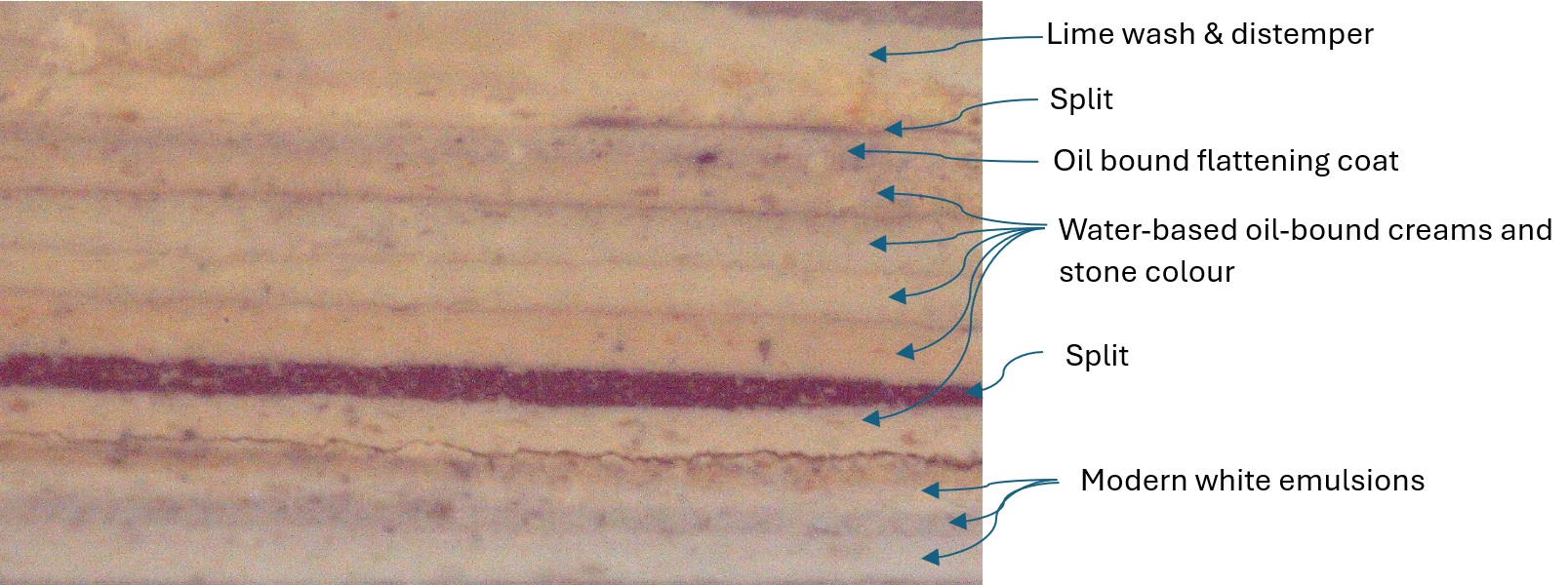
The upper cross-section is at x40 magnification under natural light, and the lower cross-section under ultraviolet light. The oldest paint layers are at the top of each photo.
Sample 2: Paint from the south wall of the Leverhulme Room
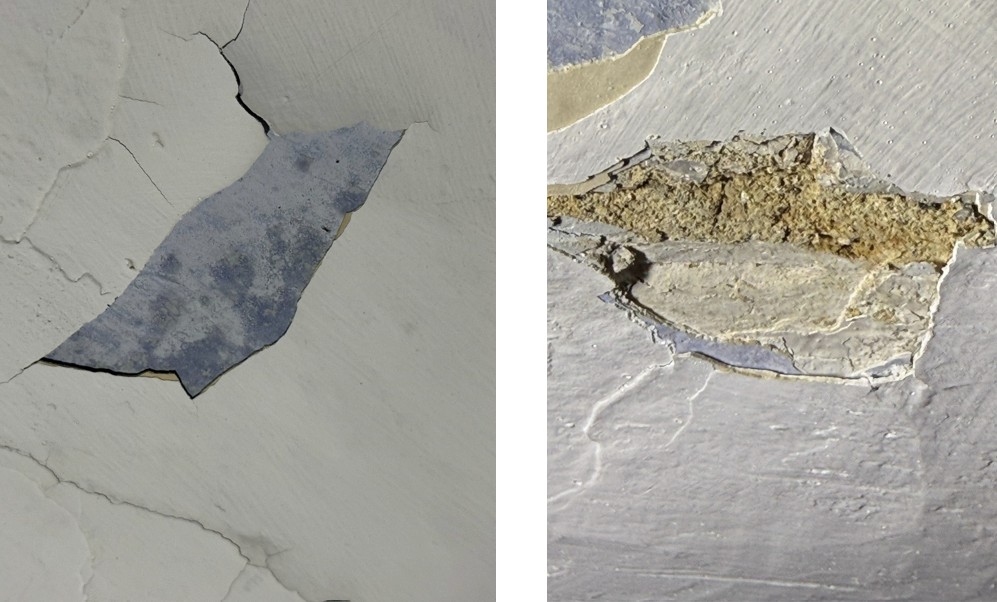
Location of sample
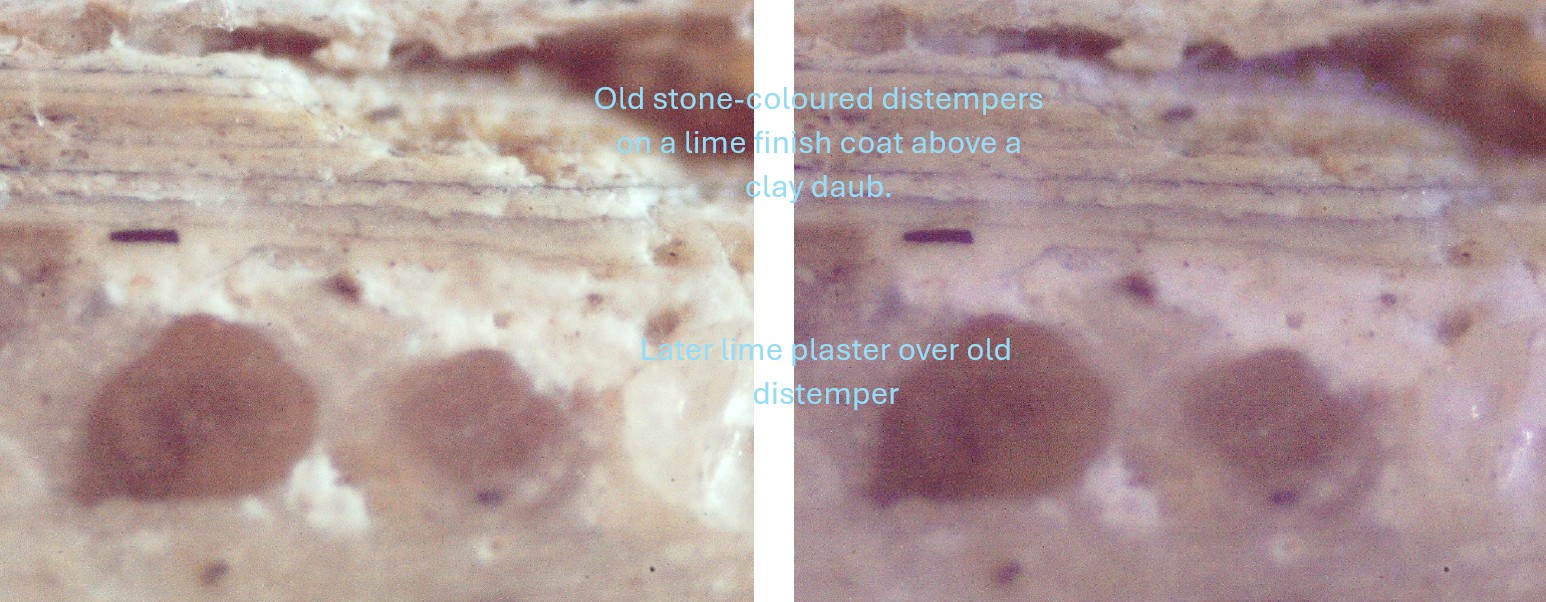
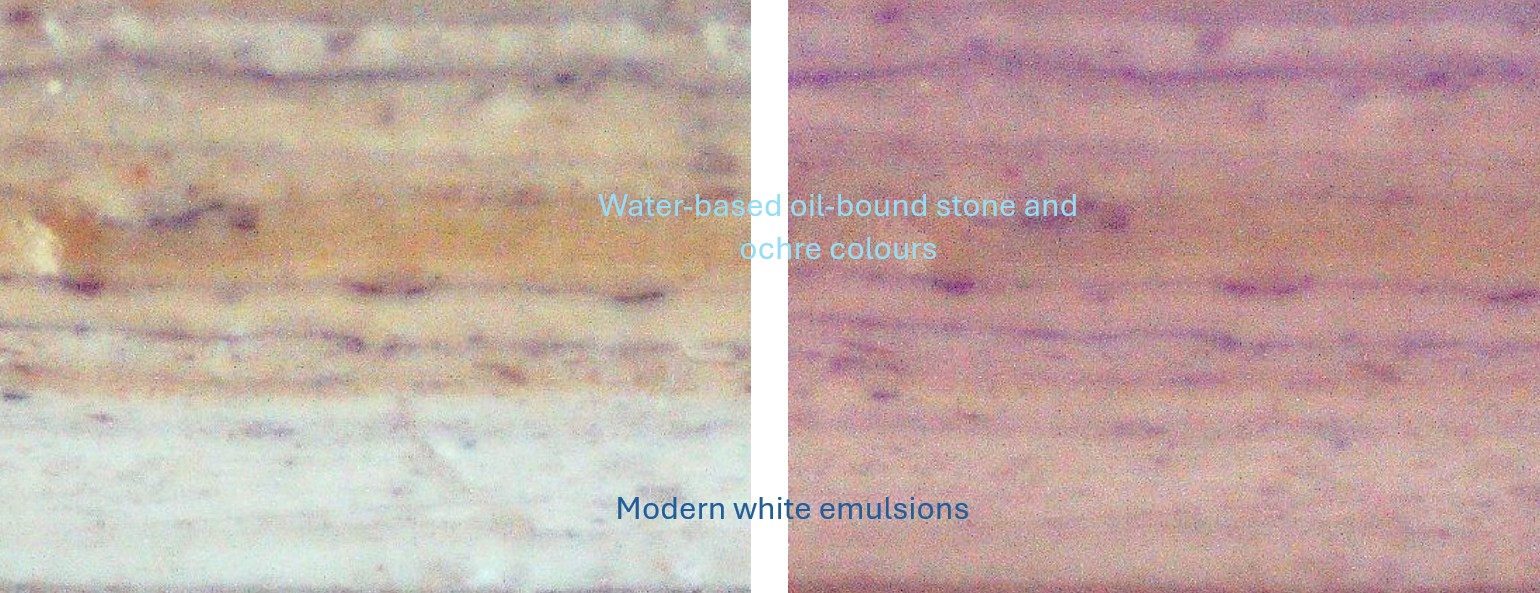
The left cross-sections are at x40 magnification under natural light, and the right cross-sections under ultraviolet light. The oldest paint layers are at the top.
Sample 3: Paint sample from the west wall of the Brownlow Bedroom (above panelling)
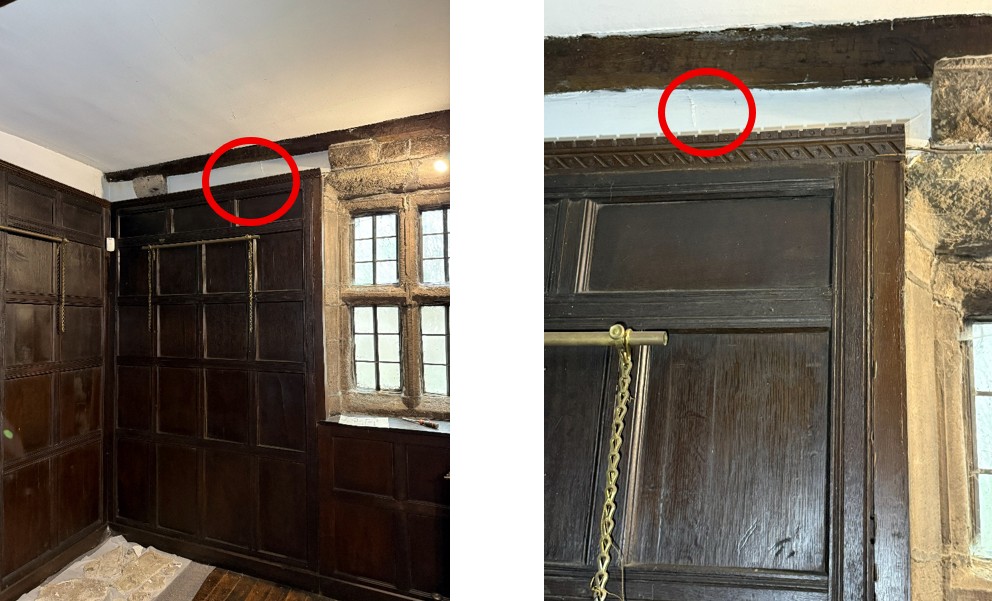
Location of sample
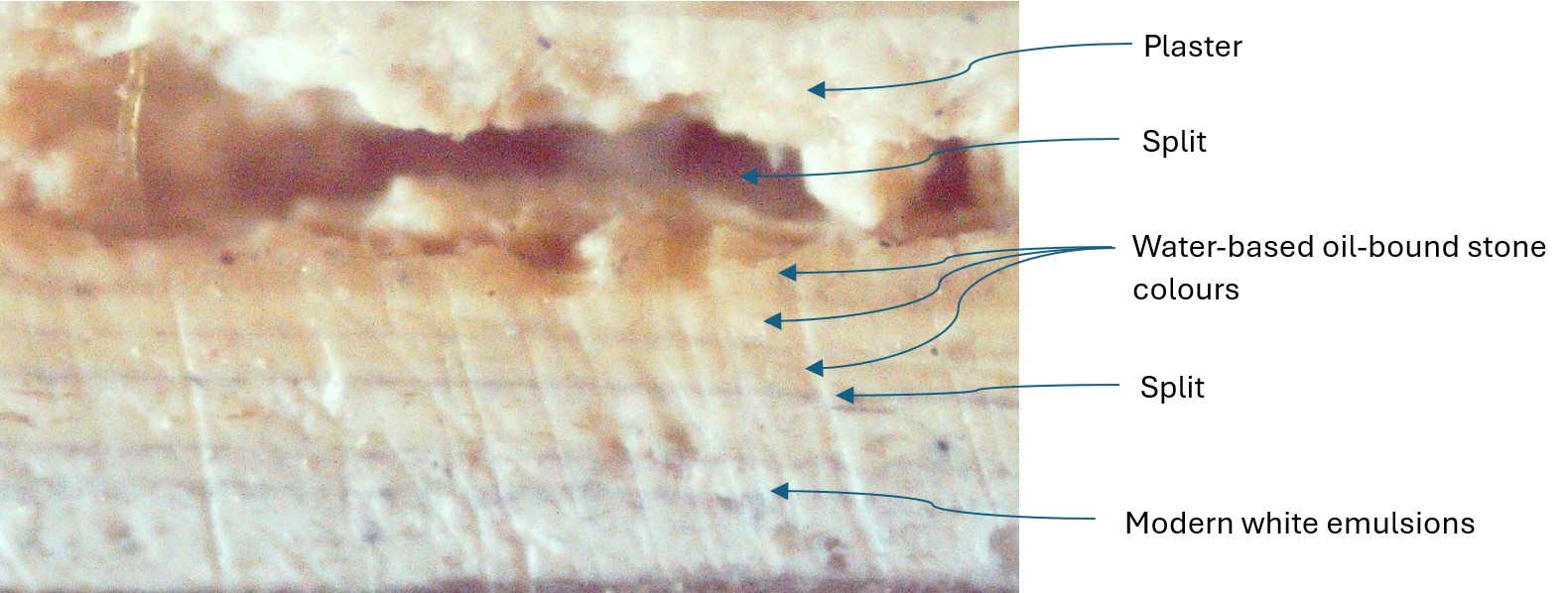
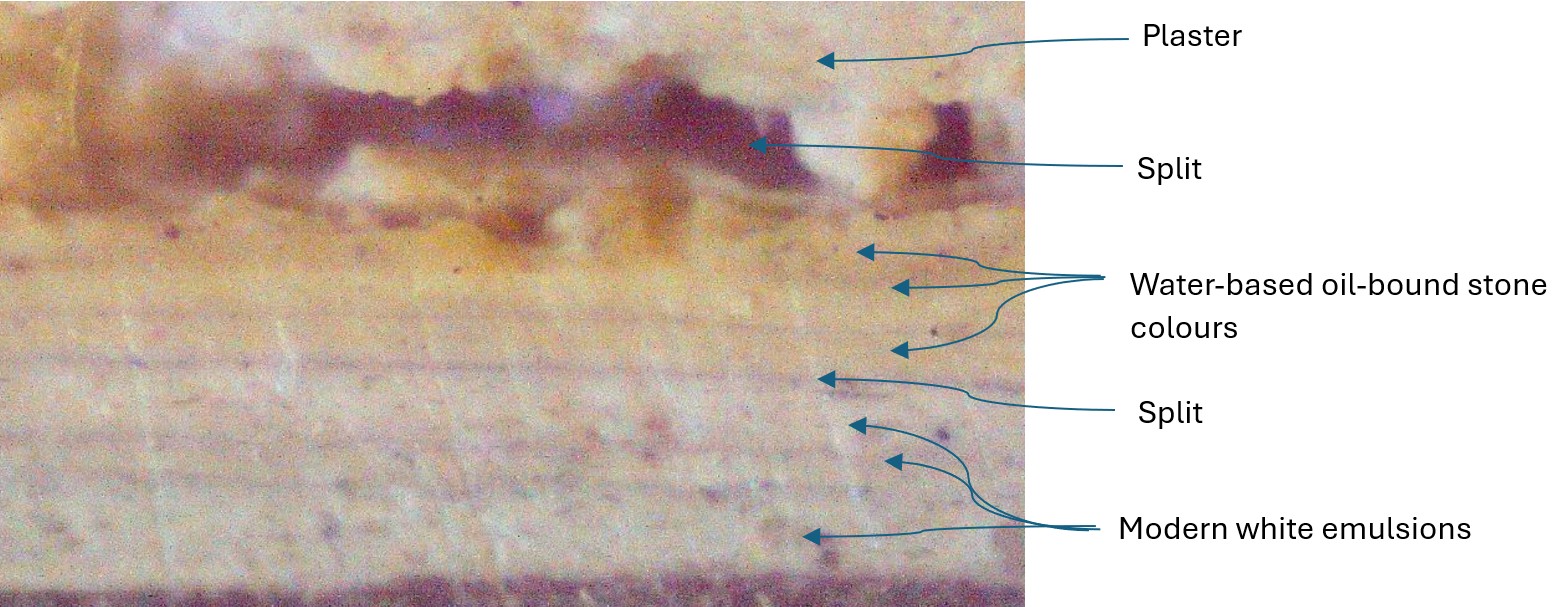
The upper cross-section is at x40 magnification under natural light, and the lower cross-section under ultraviolet light. The oldest paint layers are at the top of each photo.
Sample 4: From exposed paint on timber posts in the cupboard below the short stairway from room F1c to corridor F1.
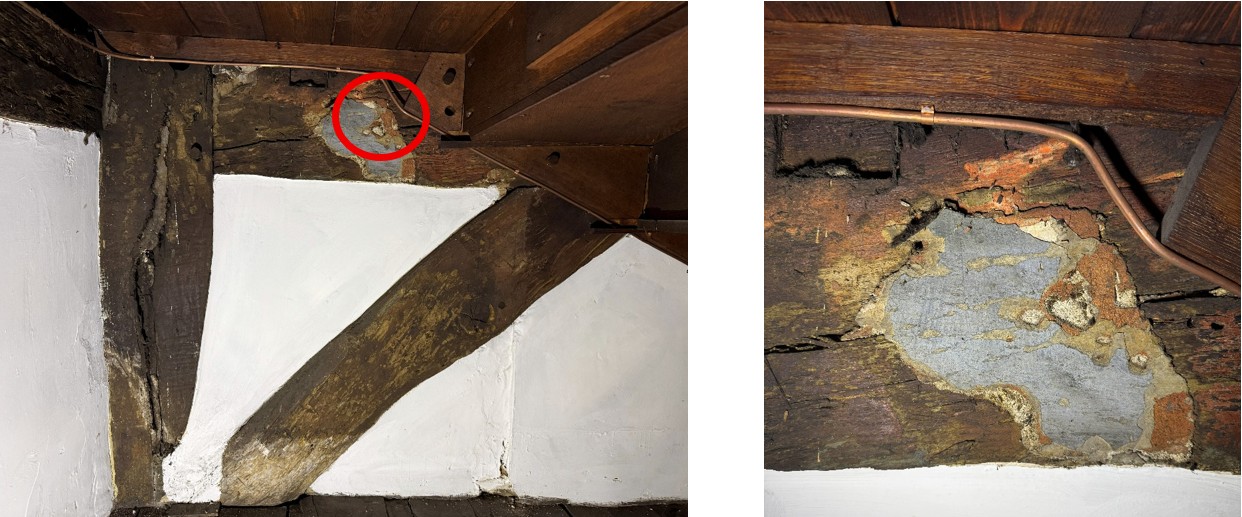
The location of the sample
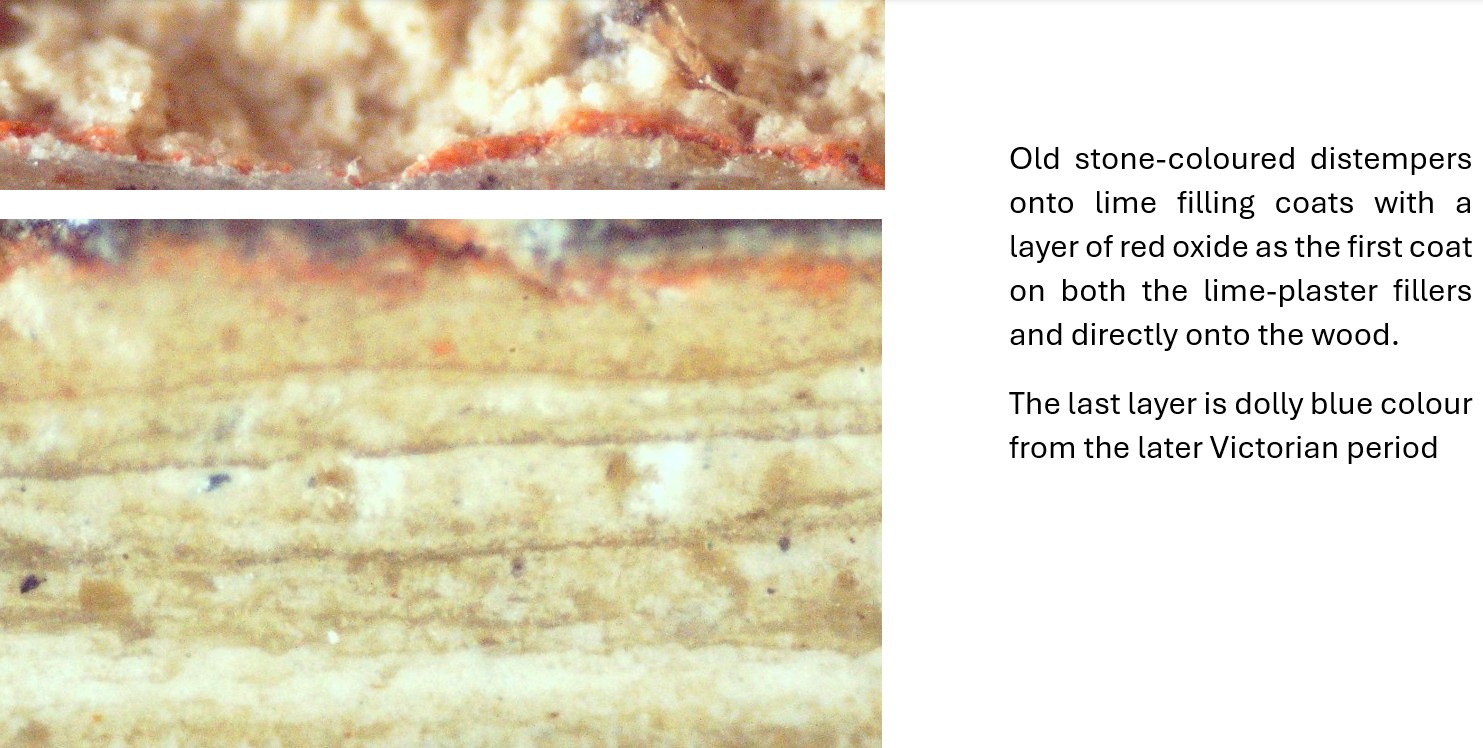
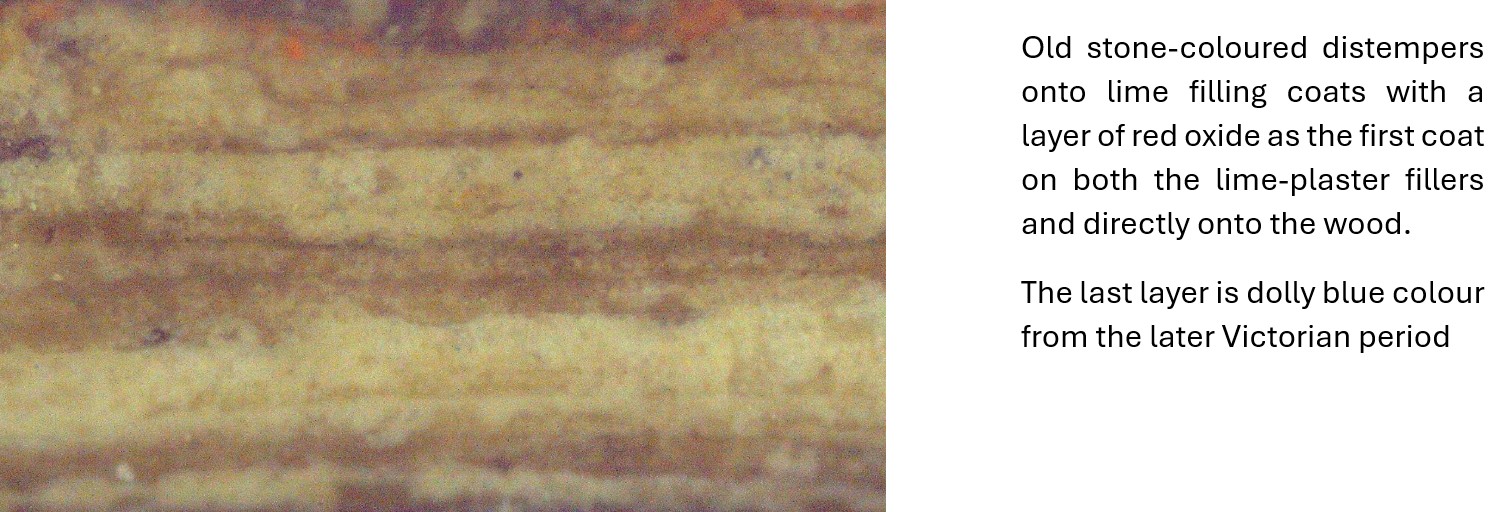
The upper cross-section is at x40 magnification under natural light, and the lower cross-section under ultraviolet light. The oldest paint layers are at the top of each photo.
Related Articles

New training course dates in December for those who wish to learn how to use lime for repointing, building and plastering
M. Womersleys provides more in-depth training courses in the use of lime for building, pointing and …

Report on the most appropriate way to repair a stone plinth Gillygate York
M. Womersleys were asked by the owner of a property on Gillygate as to the best way to repair the plinth…

A scheme for the repair of the listed Barn and Granary perpendicular to Lily Hall, June 2026
Introduction M Womersleys were asked to prepare a scheme for the repair of the listed barn …